
Beginning with Loan Security Meaning in Banking: A Simple Explanation, the narrative unfolds in a compelling and distinctive manner, drawing readers into a story that promises to be both engaging and uniquely memorable.
Exploring the world of loan security in banking opens up a realm of crucial aspects that impact both borrowers and lenders. From collateral to guarantees and co-signers, understanding these concepts is essential for a smooth financial journey.
Loan Security in Banking
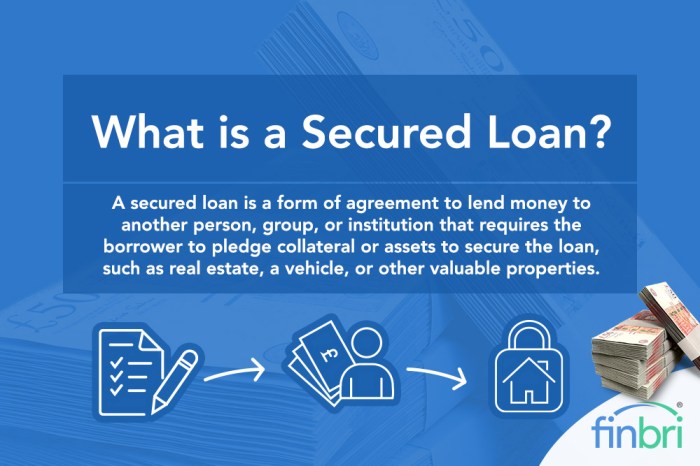
Loan security in the banking sector refers to assets or collateral provided by the borrower to the lender to secure a loan. This serves as a guarantee for the lender in case the borrower defaults on the loan.
Types of Loan Security
There are several common types of loan security used by banks:
- Real Estate: Properties such as homes or commercial buildings can be used as collateral for a loan.
- Equipment: Machinery, vehicles, or other assets can be pledged as security for a loan.
- Inventory: Goods or products in stock can be used as collateral for a loan.
- Accounts Receivable: Money owed to a business by its customers can be used as security for a loan.
Importance of Loan Security
Loan security is crucial for both borrowers and lenders. For borrowers, providing collateral can increase their chances of obtaining a loan and may result in lower interest rates. For lenders, having security reduces the risk of lending money to high-risk borrowers.
Secured Loans vs. Unsecured Loans
In secured loans, the borrower provides collateral, which reduces the lender's risk and allows for lower interest rates. In contrast, unsecured loans do not require collateral, making them riskier for lenders and typically resulting in higher interest rates for borrowers.
Collateral as Loan Security
Collateral plays a crucial role in securing loans by providing a form of protection for lenders in case borrowers default on their payments. It serves as a tangible asset that can be seized and sold to recover the outstanding loan amount.
Types of Assets Used as Collateral
Collateral can take various forms, such as real estate properties, vehicles, equipment, inventory, or even investments like stocks and bonds. These assets are pledged by the borrower to the lender to minimize the risk associated with lending money.
Evaluating Collateral Value for Loan Security
The process of evaluating collateral involves assessing the market value of the asset, considering factors like condition, demand, and depreciation. Lenders may require professional appraisals to determine the worth of the collateral accurately.
Risks of Using Collateral for Securing Loans
While collateral provides security for lenders, there are risks involved for borrowers. If they fail to repay the loan, they could lose the asset pledged as collateral. Additionally, fluctuations in asset value or unexpected circumstances can impact the borrower's ability to meet loan obligations.
Guarantees and Co-Signers
Guarantees and co-signers play a crucial role in providing additional security for loans in the banking sector. They help mitigate the risk for the lender by promising to cover the loan if the borrower defaults on payments.
Role of Guarantees
Guarantees are formal commitments made by a third party to repay the loan if the borrower is unable to do so. This provides an added layer of security for the lender, as the guarantor becomes legally obligated to fulfill the financial obligations in case of default.
Role of Co-Signers
Co-signers, on the other hand, are individuals who sign the loan agreement alongside the borrower and agree to take on the responsibility of repayment if the borrower fails to do so. Lenders see co-signers as additional assurance that the loan will be repaid, reducing the risk associated with lending
Examples of Strengthening Loan Security
- For example, a parent may act as a guarantor for their child's student loan, promising to repay the debt if the student is unable to do so.
- In another scenario, a close friend may co-sign a car loan for someone with a low credit score, helping them secure the loan with the friend's good credit history.
Difference between Guarantee and Co-Signer
The main difference between a guarantee and a co-signer lies in the legal obligations. A guarantee is a separate contract between the guarantor and the lender, while a co-signer is equally responsible for the loan along with the borrower from the start of the loan agreement.
Legal Implications and Responsibilities
Guarantees and co-signers are legally bound to fulfill the financial obligations in case of default by the borrower. They can be pursued by the lender to recover the outstanding loan amount, and their credit scores may be affected if payments are missed.
It's crucial for both guarantors and co-signers to understand the risks and responsibilities before agreeing to support a loan.
Loan-to-Value Ratio
The loan-to-value ratio is a critical factor in determining loan security in banking. It is a financial term used by lenders to assess the risk of a loan by comparing the loan amount to the appraised value of the collateral provided by the borrower.
Importance of Loan-to-Value Ratio
The loan-to-value ratio plays a significant role in the risk assessment for lenders. A higher loan-to-value ratio indicates a higher risk for the lender as it means the borrower is borrowing a larger percentage of the asset's value. On the other hand, a lower loan-to-value ratio signifies a lower risk for the lender since the borrower has more equity in the asset.
- A loan with a high loan-to-value ratio may result in higher interest rates or stricter terms to compensate for the increased risk for the lender.
- Conversely, a lower loan-to-value ratio may lead to more favorable loan terms and lower interest rates for the borrower.
Impact on Loan Approval Decisions
The loan-to-value ratio directly impacts loan approval decisions. Lenders typically prefer lower loan-to-value ratios as they indicate a lower risk of default. If the loan-to-value ratio is too high, lenders may reject the loan application or require additional collateral to mitigate the risk.
- For example, if a borrower is seeking a mortgage with a high loan-to-value ratio, they may be asked to make a larger down payment to reduce the lender's risk.
- Alternatively, if the loan-to-value ratio is within an acceptable range, the borrower is more likely to receive approval for the loan.
Strategies to Improve Loan-to-Value Ratio
Borrowers can take several steps to improve their loan-to-value ratio for better loan security. One common strategy is to make a larger down payment to reduce the percentage of the loan amount compared to the asset's value. Additionally, borrowers can work on increasing the value of the collateral or paying down existing debt to improve their equity position.
- By improving their loan-to-value ratio, borrowers can increase their chances of loan approval, secure more favorable loan terms, and lower the overall cost of borrowing.
Summary
In conclusion, delving into the intricacies of loan security sheds light on the vital role it plays in the banking sector. By grasping the significance of collateral, guarantees, co-signers, and the loan-to-value ratio, individuals can navigate the borrowing landscape with confidence and clarity.
Helpful Answers
What is the role of collateral in loan security?
Collateral acts as a form of security for lenders in case the borrower defaults on the loan. It can be in the form of assets like property, vehicles, or investments.
How does the loan-to-value ratio impact loan approval decisions?
The loan-to-value ratio helps lenders assess the risk of the loan. A lower ratio typically indicates less risk and may lead to easier loan approval.
What distinguishes a guarantee from a co-signer in loan agreements?
A guarantee is a promise to pay the debt if the borrower defaults, while a co-signer is equally responsible for the debt along with the borrower.