
Revenue Based Financing for SaaS Startups: Pros and Cons sets the stage for this enthralling narrative, offering readers a glimpse into a story that is rich in detail with casual formal language style and brimming with originality from the outset.
As we delve into the world of revenue-based financing for SaaS startups, we uncover a realm where financial strategies intertwine with innovation, paving the way for unprecedented growth and success in the digital landscape.
Introduction to Revenue Based Financing for SaaS Startups
Revenue-based financing for SaaS startups is a funding model where a company receives capital in exchange for a percentage of its future revenues. Unlike traditional funding methods like venture capital or bank loans, revenue-based financing offers a flexible and less risky way for startups to access capital without giving up equity.
Differences from Traditional Funding
- Revenue-based financing does not require giving up equity, unlike venture capital investments.
- Payments are based on a percentage of revenue, making it more flexible than fixed loan repayments.
- There is typically no personal guarantee or collateral required, unlike traditional bank loans.
Successful Examples
- One successful SaaS startup that utilized revenue-based financing is Buffer, a social media management platform. They used this funding model to grow their business without diluting ownership.
- Another example is Close, a sales CRM software company, which opted for revenue-based financing to scale their operations while maintaining control over their company.
Pros of Revenue Based Financing for SaaS Startups
Revenue-based financing offers several advantages for SaaS startups, making it an appealing option for funding. Revenue-based financing models provide flexibility to SaaS startups in terms of repayment. Unlike traditional loans, payments are directly tied to revenue, allowing startups to manage cash flow more effectively.One key benefit of revenue-based financing is how it aligns the interests of investors and SaaS startups.
Investors are motivated to support the growth of the startup since their return is directly linked to the company's revenue. This alignment encourages both parties to work towards the success of the business.
Potential for Faster Growth and Scalability
Revenue-based financing can fuel faster growth and scalability for SaaS startups. By injecting capital based on revenue performance, startups have the opportunity to invest in marketing, product development, and scaling operations without taking on high levels of debt. This can accelerate growth and help the business reach its full potential more rapidly.
Cons of Revenue Based Financing for SaaS Startups
Revenue-based financing, while offering several advantages, also has its drawbacks when compared to traditional equity financing for SaaS startups. Let's delve into some of the limitations and risks associated with revenue-based financing.
1. Limitation Compared to Equity Financing
- Revenue-based financing can be more expensive in the long run compared to equity financing, as the repayments are directly tied to the revenue generated by the startup.
- Unlike equity financing, where investors share in the success of the startup without immediate repayment obligations, revenue-based financing requires regular payments regardless of profitability.
- Startups may find it challenging to scale rapidly with revenue-based financing, as a significant portion of their revenue will be allocated towards repayments rather than growth initiatives.
2. Long-Term Potential Limitation
- Revenue-based financing could potentially limit the long-term growth and success of SaaS startups, as they may be constrained by the fixed repayment terms based on their revenue.
- Startups may miss out on strategic opportunities for expansion or innovation due to the financial constraints imposed by revenue-based financing agreements.
- This limitation may hinder the ability of SaaS startups to compete effectively in the market and achieve their full potential in terms of market share and product development.
3. Risks of Repayment Obligations
- There are inherent risks associated with revenue-based financing in terms of repayment obligations, as startups are obligated to make regular payments regardless of their financial performance.
- If a SaaS startup experiences a downturn in revenue or faces challenges in scaling their operations, they may struggle to meet the repayment obligations, leading to financial distress and potential default.
- The risk of default in revenue-based financing could have severe consequences for SaaS startups, including the loss of control over their business or even bankruptcy in extreme cases.
Comparison between Revenue Based Financing and Traditional Funding
Revenue-based financing and traditional venture capital funding are two common ways for SaaS startups to raise capital. Let's explore the differences between the two and how they impact ownership, control, and costs for startups.
Differentiation between Revenue-Based Financing and Traditional Venture Capital
Revenue-based financing involves receiving funds in exchange for a percentage of future revenue, while traditional venture capital funding typically involves selling equity in the company. This means that with revenue-based financing, the startup retains ownership and control, whereas with traditional funding, ownership is diluted as equity is given up to investors.
Impact on Ownership and Control of SaaS Startups
With revenue-based financing, SaaS startups can maintain ownership and control since they are not required to give up equity. This allows founders to retain decision-making power and strategic direction of the company. On the other hand, traditional funding often leads to dilution of ownership and control as investors take a stake in the business.
Cost Implications of Revenue-Based Financing vs Traditional Funding
In revenue-based financing, the cost is tied to the revenue generated by the SaaS startup. This means that if the company does well, the cost will be higher, but if revenue decreases, the cost will also decrease. On the other hand, traditional funding involves fixed costs in the form of interest payments, equity stakes, and other fees, regardless of the company's performance.
Conclusive Thoughts
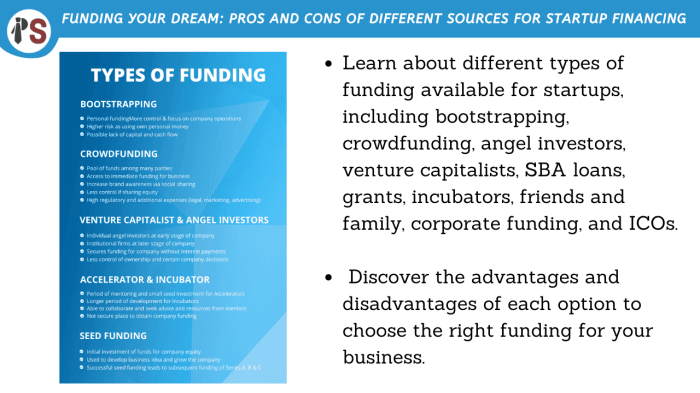
In conclusion, Revenue Based Financing for SaaS Startups: Pros and Cons sheds light on the dynamic landscape of funding options available to emerging software companies. By weighing the advantages and disadvantages meticulously, entrepreneurs can navigate the intricate terrain of financial decisions with confidence and foresight.
Common Queries
What are the main advantages of revenue-based financing for SaaS startups?
Revenue-based financing offers flexibility in repayments, aligns investor interests with startup success, and can lead to faster growth compared to traditional funding methods.
How does revenue-based financing impact long-term potential for SaaS startups?
While revenue-based financing can provide immediate capital, it may limit long-term potential by requiring a percentage of revenue as repayment, potentially restricting reinvestment for future growth.
What are the risks associated with revenue-based financing?
One risk is the obligation to repay a portion of revenue, which could impact cash flow and limit financial resources for other operational needs. Additionally, if revenue growth slows, the repayment burden may become more challenging.